First 6 Hours: Immediate Safety
The first six hours are about safety, not repair. Water and electrical damage kill more people after storms than the storms themselves.
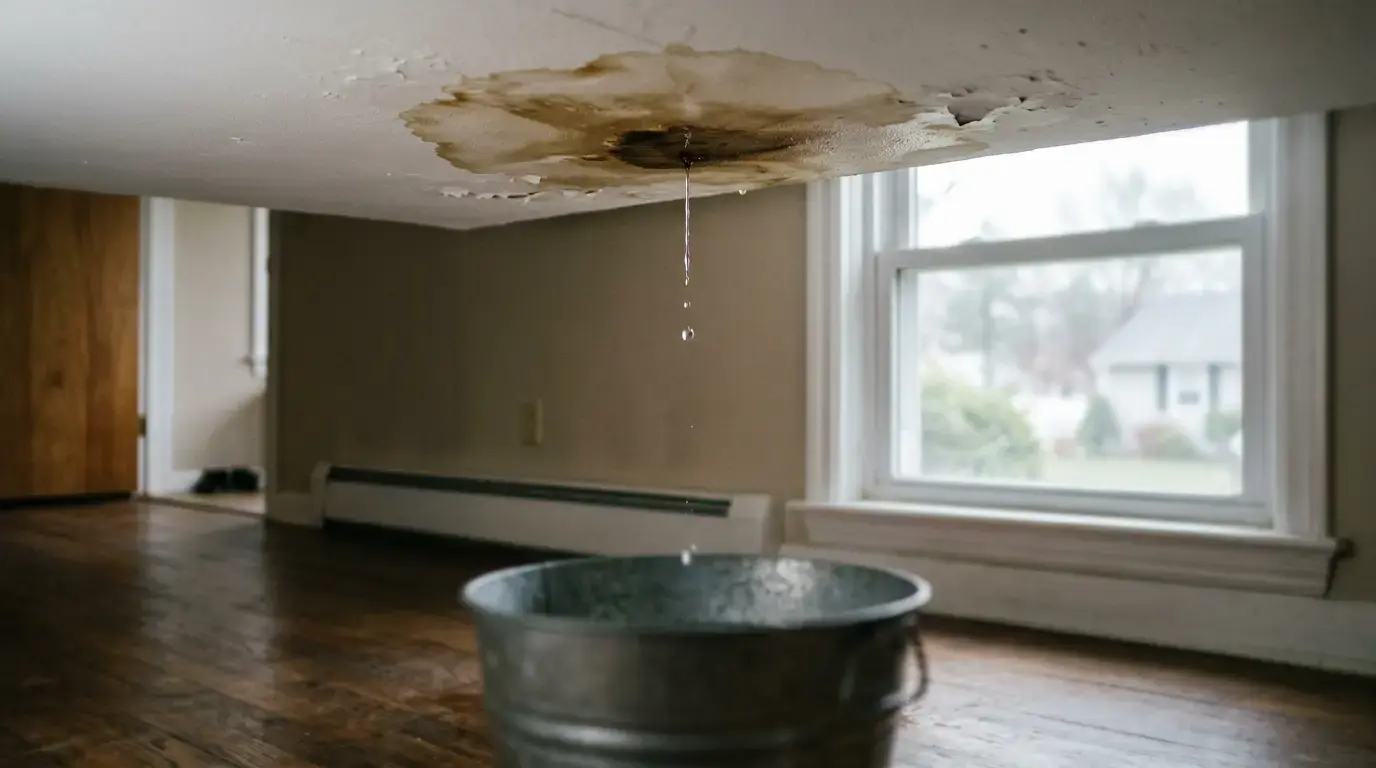
Stay out of damaged rooms. Sagging ceilings can collapse without warning. Water on electrical outlets is a shock hazard.
Turn off power in leak zones. Cut the breaker to any room with active water. Water and 120V don’t mix.
Move valuables and furniture. Anything under active drips or against damp walls. Speed matters.
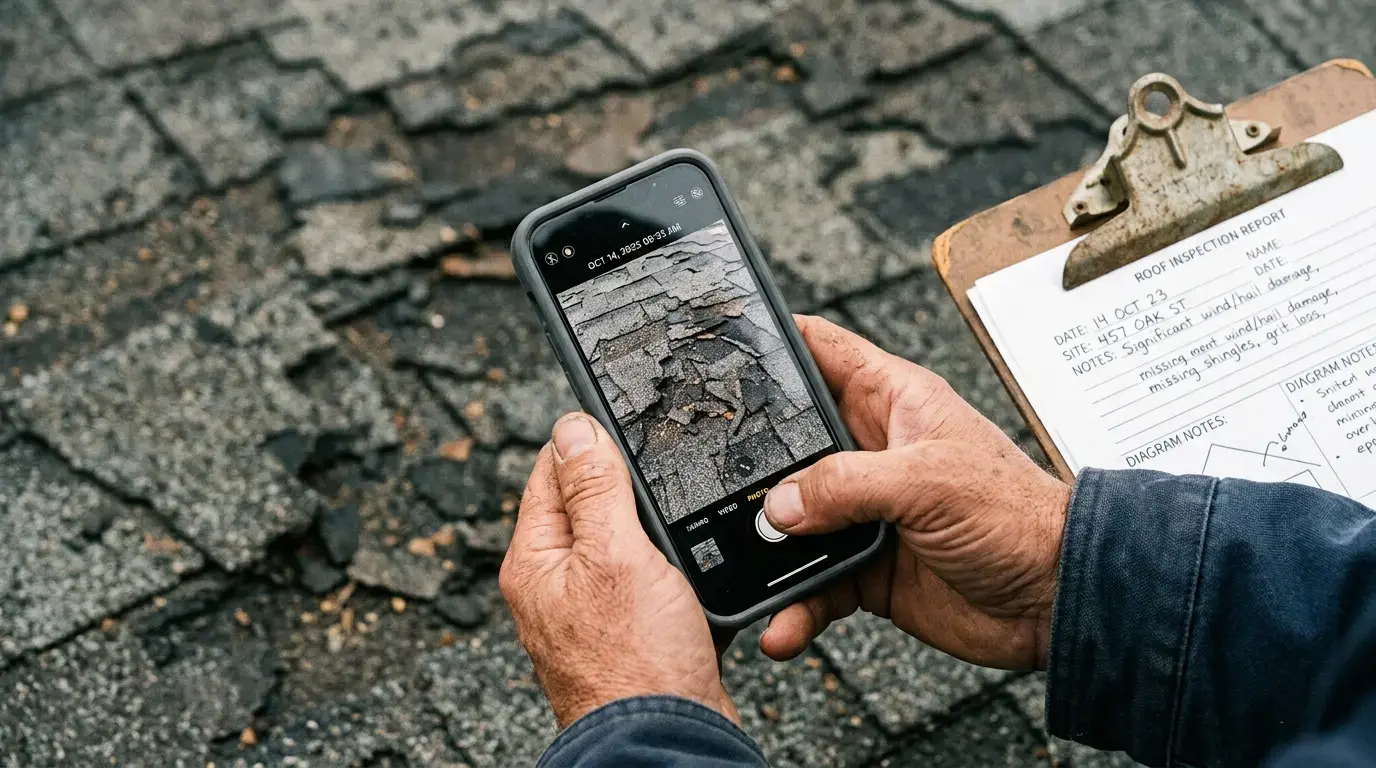
Photograph immediately. Before you touch anything, before cleanup. Time-stamped phone photos are enough.
Do not climb on the roof. Wet debris, hidden damage, broken decking. Wait for a professional with proper safety gear.
First 24 Hours: Document Everything
The documentation you do in the first 24 hours will make or break the insurance claim. This is not the time to be shy with the camera.
1All Four Sides of the House
Ground-level photos of every exterior wall. Wide shots showing overall damage plus close-ups of specific issues.
2Video Walkthrough
2—3 minute video of every damaged area. Interior and exterior. Narrate what you see for context.
3Inventory Damaged Items
Written list of everything damaged with estimated replacement value. Furniture, electronics, personal belongings.
4Weather Report Screenshot
Screenshot of the storm date, time, and severity from weather.com or NOAA. Proves the event occurred.
5Photograph Neighbor Damage
If neighbors have similar damage, photograph it (from your property). Validates the storm as a legitimate weather event.
6Preserve All Debris
Don’t discard fallen branches, torn shingles, or damaged items until adjuster has seen them. Bag and label if needed.
Emergency Tarping: When and How
A properly installed emergency tarp prevents days of additional interior damage. But timing and technique matter.
When to Tarp
After documentation is complete. Never before — the tarp will cover evidence the adjuster needs to see.
Who Should Tarp
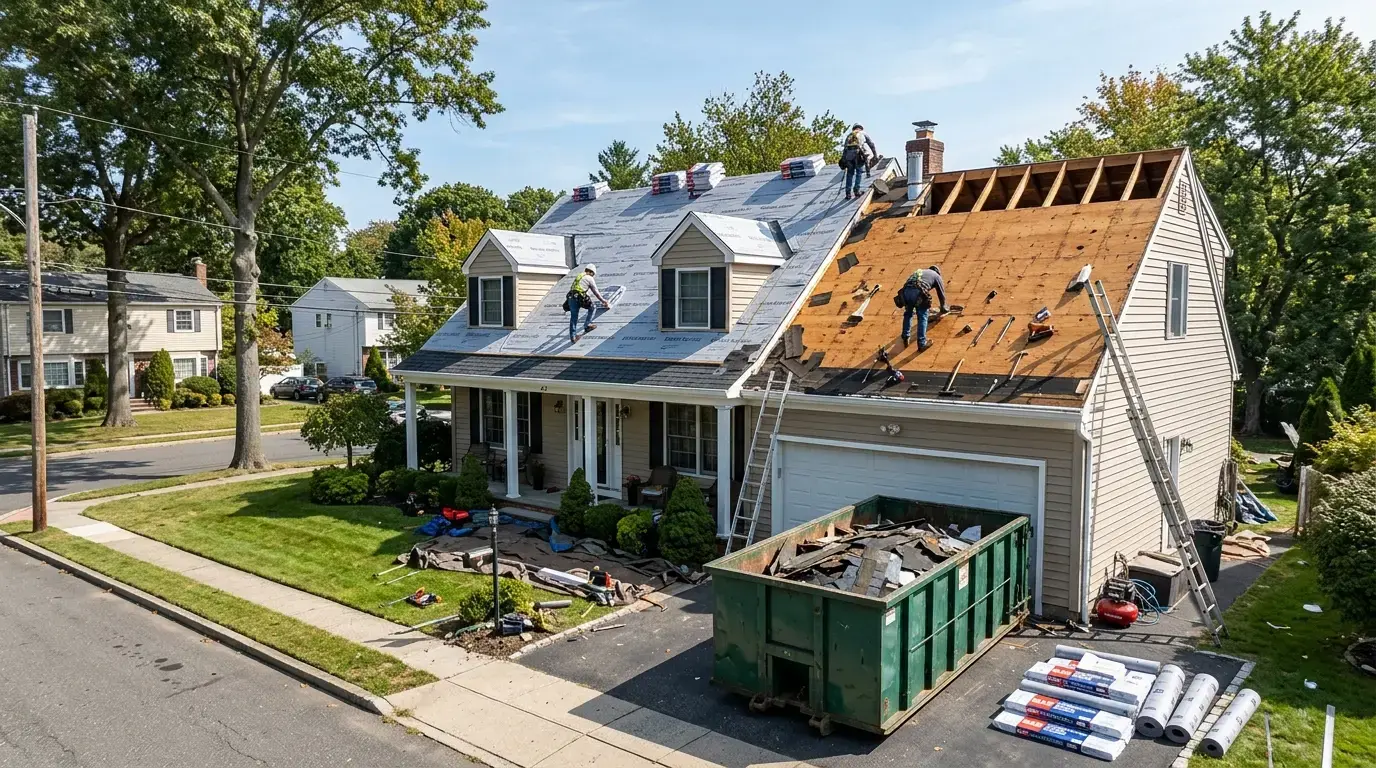
A licensed roofer with proper safety equipment. Insurance covers professional emergency tarping. Never climb the roof yourself, especially while wet.
Why Not a DIY Tarp
A tarp that’s wrong side up, wrong direction to the pitch, or held down with the wrong fasteners can trap water and cause more damage than no tarp at all. Professional install is usually free with the eventual insurance-covered work.
Insurance Pays for Emergency Mitigation
Your policy explicitly covers reasonable steps to prevent further damage, including emergency tarping, temporary board-up and water extraction. Save all receipts and photograph the work as it’s done.
When to Call Insurance
After the first round of documentation. You want a claim number in the system before you start any work — but you want your evidence organized first.
Within 24—48 hours of the event. Later filings raise flags. Many policies have strict timelines.
Get a claim number in writing. Ask for it via email so you have documentation of the report timing.
Know your deductible. If damage is under the deductible, filing hurts your rate without recovering money.
Get everything in writing. Verbal commitments from insurance don’t stand up. Emails and letters do.
When to Call a Roofer
Same day as calling insurance. Some things you want your roofer doing before the adjuster arrives.
Pre-adjuster inspection. Your roofer documents damage the adjuster might miss. Photos from angles the adjuster can’t reach.
Emergency tarp install. Stops further damage while insurance process runs.
On-site during adjuster visit. A good roofer walks the roof with the adjuster to ensure all damage is documented.
Xactimate-format estimate. Matches the software insurance uses. Faster approvals, fewer disputes.
What NOT to Do
The mistakes homeowners make in the first 48 hours cost tens of thousands in denied claims and additional damage.
Don’t discard damaged items. The adjuster needs to see them. Bag them but keep them until the claim is approved.
Don’t sign contracts from door-knockers. Storm-chasing contractors appear within hours. They’re gone by the time work is needed.
Don’t accept the first insurance settlement. First offers are typically 15—25% low. Have a roofer review before signing.
Don’t repair before the adjuster inspects. Any repair before inspection can be denied as “pre-existing.” Emergency tarping is the only exception.
Don’t sign an Assignment of Benefits without a lawyer. This transfers your insurance rights to the contractor. Can be exploited.
Common Insurance Rejects to Watch For
“Cosmetic-only” hail damage (challenge this), “wear and tear” on obviously fresh damage, timeline issues (file within 48 hours to avoid this), and “pre-existing condition” on unrepaired damage from previous events.
The Bottom Line
The 48 hours after a storm is the single most valuable window in the entire claim process. Documentation done in that window is worth thousands. Documentation missed in that window cannot be recreated later.
If your roof got hit today, start with photos, then call your insurance, then call a roofer — all within 24 hours. If you need help now, call us at 347-593-4431. We answer 24/7 and can be on-site with a tarp and camera in most cases within 2 hours across our service area.