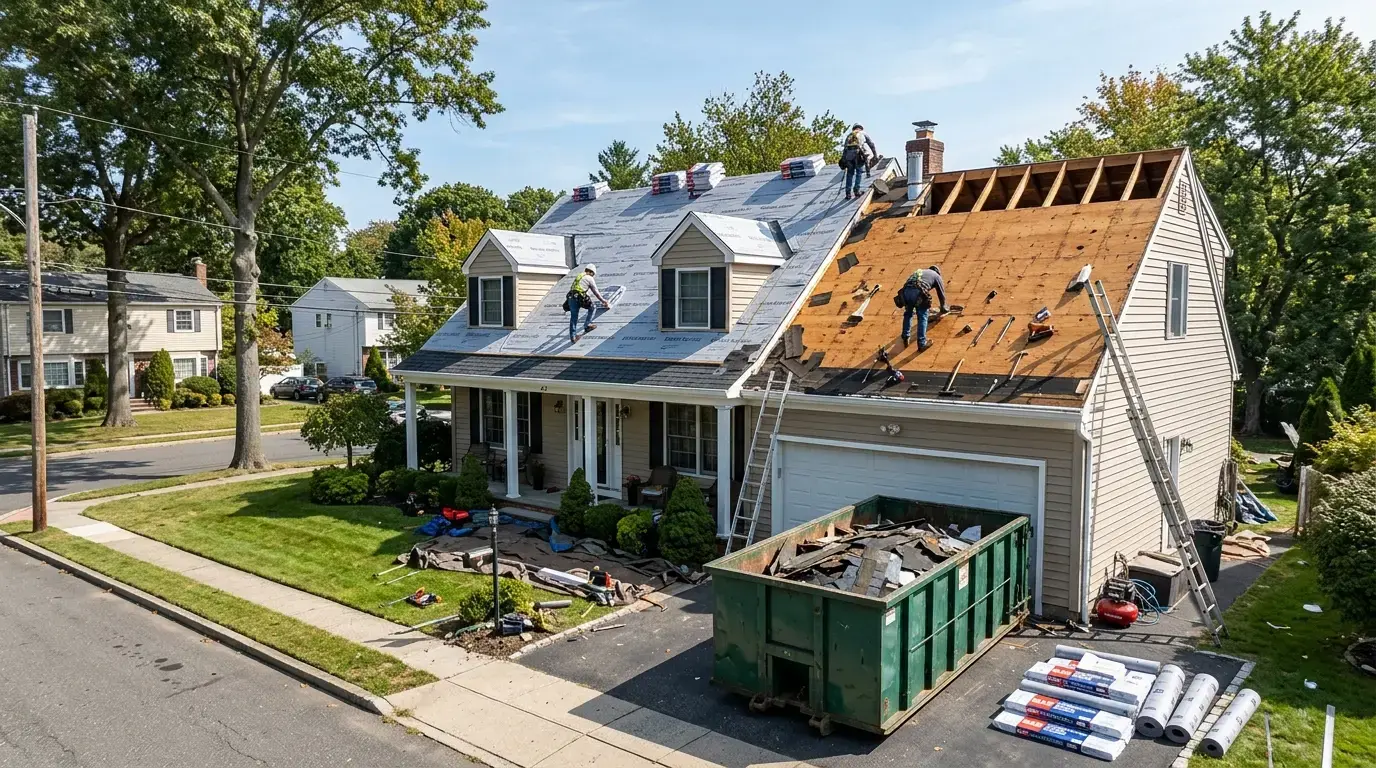
A roof leak is rarely just about the water you see. The stain on the ceiling almost never marks the actual entry point. Water travels along framing before it drops. Understanding this changes everything about how you respond in the first hour.
Common Causes of Roof Leaks
Most residential leaks come from a handful of predictable failures. Before assuming the worst, it helps to know where roofers actually find the problems on real inspections in New York homes.
Damaged or missing shingles. Wind lifts asphalt shingles and rain gets under the layer. Common after any storm above 40 mph.
Cracked flashing. The metal seals around chimneys, vents and skylights fail before the shingles do. This is the #1 leak source we find.
Clogged gutters. Water backs up under the shingle edge and enters the wall cavity. Frequent in fall after leaves drop.
Ice dams. Melted snow refreezes at the eaves, pushing water up under the shingles. A New York winter classic.
Simple age. Asphalt shingles last 20-25 years. After that, small failures become constant leaks.
What to Do in the First Hour
Time matters. Water that sits for hours turns a repair into a rebuild. The order below is what we tell homeowners on the phone before we arrive.
1Move Furniture and Valuables
Anything below the leak zone. Electronics, rugs, upholstery, papers. Water finds them faster than you think.
2Contain the Water
Buckets under active drips. Old towels around the perimeter. A tarp under a large area if you can lay one down safely.
3Drain a Bulging Ceiling
If drywall is sagging with trapped water, puncture the low point with a screwdriver into a bucket. Controlled release beats a collapse.
4Turn Off Power in the Affected Area
Water and electrical wiring in the ceiling are a serious hazard. Cut the breaker to any room where water is running.
5Photograph Everything
Every stain, drip and damaged item. Date-stamped photos from your phone are enough. This is your insurance file.
6Call a Licensed Roofer
Same day. An emergency tarp costs a fraction of a full rebuild. We answer 24/7 for exactly this reason.
What NOT to Do
Homeowners often make the leak worse trying to fix it. These are the mistakes that turn a small repair into a full-section replacement.
Don’t climb on a wet roof. Wet shingles are slick, and the roof is often damaged where you least expect it.
Don’t apply tar or sealant blindly. If you seal over the wrong spot, you trap water and hide the actual entry point from the roofer.
Don’t wait for the rain to stop. Interior damage compounds by the hour. Mold starts in 24-48 hours.
Don’t assume it’s where the water shows. Water travels sideways along rafters. The entry point is often several feet away.
Sagging Ceiling? Leave the House.
A drywall ceiling holding trapped water can collapse without warning. Get everyone out of the room, cut the power to that area, and call from outside.
When to Call a Professional Immediately
Some situations are past the DIY stage the moment you notice them. Any of the following means the call happens before anything else.
Active leak during an ongoing storm
Visible sagging or bulging drywall
Multiple leaks in different rooms
Daylight visible from inside the attic
Missing shingles you can see from the ground after a storm
Water running down interior walls (not just the ceiling)
How Insurance Views Roof Leaks
Insurance treats leaks in two categories. The difference decides whether you file a claim or pay out of pocket.
Sudden Storm Damage (Usually Covered)
Wind, hail, tree strike, ice dam. These are treated as covered peril events on most policies. A roofer familiar with claims will document the storm damage in the format the adjuster expects.
Wear and Tear (Not Covered)
Age-related failures, missed maintenance, gradual deterioration. Not covered under standard policies. If a roof is 22 years old and starts leaking, insurance will call it end-of-service-life, not damage.
Document Before Cleanup
Every photo you take before touching anything is evidence. Once you dry the floor and patch the ceiling, the visual proof is gone. Photograph first, mitigate second.
Preventing the Next Leak
Most emergency calls trace back to something that could have been caught in a 20-minute inspection. Prevention is boring and cheap. Emergencies are expensive.
Annual roof inspection. Spring or fall. Catches issues before they become interior damage.
Clean gutters twice a year. Spring and late fall. Overflow behind the fascia is a leading cause of hidden leaks.
Trim branches within 10 feet of the roof. Rubbing branches strip granules from shingles. Falling branches are worse.
Address small issues within a week. A single lifted shingle is a $150 fix. Water damage from that same shingle over one winter is $5,000.
The Bottom Line
A roof leak is never just water. It’s wet insulation losing its R-value, an electrical hazard in the wiring you can’t see, drywall that’s already growing mold, and structural framing that starts to rot inside 30 days.
Every hour the water sits changes the size of the repair. The homeowners who call at the first drip pay for a patch. The ones who wait a week pay for a rebuild. It’s that simple.
If you’re reading this while a bucket fills up, stop reading and get a professional on site. If you’re reading this on a dry day, book a roof inspection before the next storm season.